ADHD diagnoses are controversial, and have been at least since I worked at a specialised ADHD team for adults in 2008. We know from research women and men each have an equal chance of having ADHD. The official diagnostic manual Psychology uses (DSM-V) has unfortunately always based their description of symptom expression on young boys. For a long time, it was even thought ADHD could disappear for adults, but the expression just changed when people grew up. You can imagine how many ADHD diagnoses were missed for adult men, girls and women.
The impact of ADHD changes throughout people’s lives. When I worked at the Adult ADHD specialist centre, there were a few very common phases we would see people come in; 1. their child received a diagnosis and they recognised the symptoms; 2. they moved to a different phase in life with more demands on their executive functioning. Like starting college, having children, menopause or even retirement. I remember an older man, who during his working life had a secretary at work and his wife at home to organise things. As he retired, the secretary disappeared and his family expected him to contribute more equally at home. This was when he ran into his ADHD challenges. Luckily for him and his family, medication helped a lot.
ADHD is heterogeneous. While inheritable, there is not one ADHD gene, there are many. There are so many ways in which dopamine transmission in certain parts of the brain can go sideways. Not enough dopamine production, faulty receptors, signal transmission problems. And at the surface they all express as ADHD. And for all of them dopamine re-uptake inhibitors (like Methylphenidate) can work very well.
Some people think ADHD meds are the same as drugs. For Depression we prescribe Serotonin re-uptake inhibitors. But Dopamine re-uptake inhibitors get stigma. As this is given to young children sometimes, there is actually more research on its effects (short term and long-term) than for most other medications. It’s safe, this has been shown for many decades.
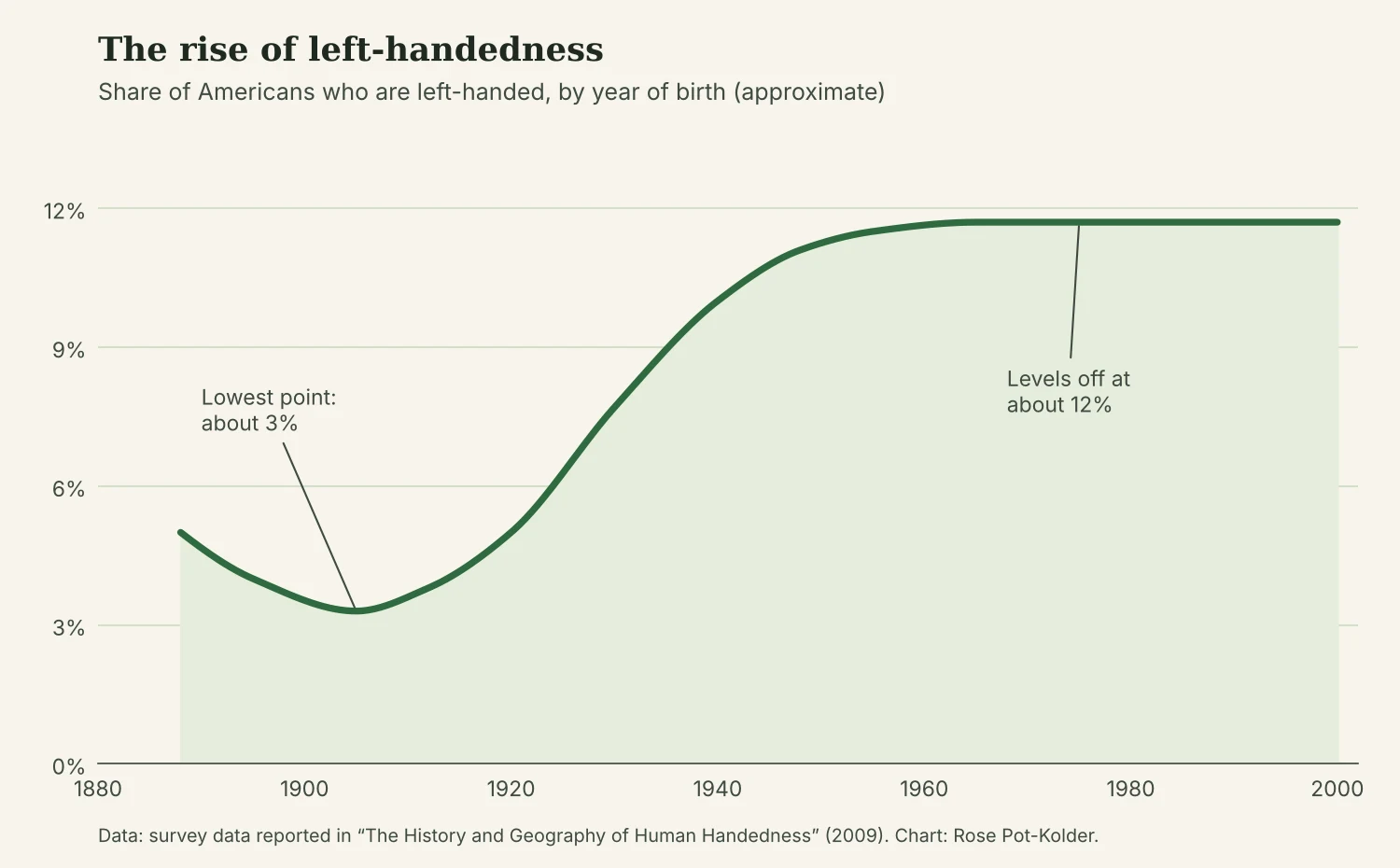
As it has been underdiagnosed for so long, we now see a steep rise in diagnoses. Similar to the picture below of people being recognised as left-handed. Once people were allowed to be what they already were, there forms an S-curve. We are now in the steep bit, and it will taper off just fine. No worries at all.
Does that mean there is never a false-positive diagnosis? Nah, there will be for sure, and that is a problem for those diagnosed. As it means a delay in receiving best-practice care for what their real issues are. Does it mean no one ever misuses ADHD medication? Nope, people will get their hands on it. But also as someone who tried both ADHD meds and actual Speed in their student days, trust me when I say it REALLY is not the same thing at all! 😊